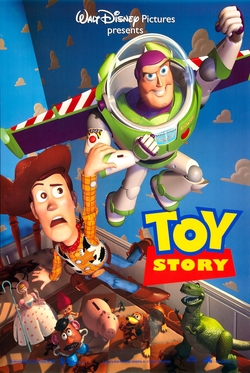
1995
Toy Story
The Greatest Of 3D Animation
3D animation is more than technical progress. At its best, it turns code into character, simulation into emotion, and digital space into cinema. This collection highlights landmark works that permanently changed how animated stories move, look, and land.
Explore The Canon


These are not just popular titles. Each one represents a moment when 3D animation expanded what the medium could do, whether through believable acting, bold design, effects breakthroughs, or a new visual grammar.
Curated Spotlight
Pixar Animation Studios • 1995
The first fully computer-animated feature film proved that digital characters could carry a complete emotional story, not just a demo reel of technology.
It turned CG from a novelty into a storytelling medium and set the baseline for modern feature animation.
Clear silhouette-driven character animation and appealing, readable digital staging.
Momentum
The all-CG feature becomes viable, and the industry realigns around computer animation.
Broader comic performance and pop-energy editing show CG can be anarchic, not just pristine.
Underwater lighting, volumetrics, and environmental simulation deepen the sense of immersion.
Minimal dialogue and camera language prove digital characters can feel achingly human.
FX-heavy snow and ice become story tools, not background decoration.
Stylization breaks the photoreal ceiling and reminds the medium that graphics can be graphic.
What Greatness Looks Like
Great 3D animation is never just smooth motion. It is intention in the eyes, rhythm in the pose changes, and believable thought before action.
Hair, cloth, water, smoke, snow, and light give CG its physical credibility. The best films use those tools to reinforce mood and storytelling.
Landmark work does not chase generic polish. It decides what kind of image it wants to be and bends the pipeline to make that identity unmistakable.
Final Frame
From Toy Story opening the door to Spider-Verse blowing past realism, these works show that the medium evolves when artists treat technology as language, not just tools.